Compress Image Online Free, Live Preview in Browser

Upload image to compress JPG, PNG, WebP, or AVIF for social media or web, smaller files in seconds.

or drop the image here

About this tool

Compress image online free, right in your browser, for social media uploads, web pages, email attachments, or a profile picture upload. Drop a JPG, PNG, WebP, or AVIF image onto the page and the preview updates instantly using canvas, every slider move is local with no network. When you click Download, the file is sent over HTTPS to our compression service, a Cloudflare Worker backed by sharp and libvips, the same encoder stack Vercel and Shopify use. The server encode produces files 10 to 15 percent smaller than the browser preview at the same quality setting. Files are held in a tenant-isolated cache for a short time, then removed. The tool accepts files up to 25 MB on the server lane. It works best for photographers, developers, and product teams who need smaller files without switching software or opening an editor.

Open the compress image tool
How to compress image online in your browser

How to compress image online in your browser

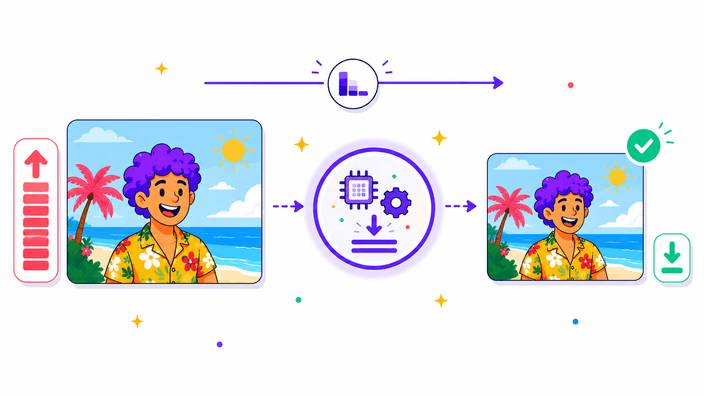
Upload image and the tool takes it as JPG, PNG, WebP, or AVIF and makes a smaller copy. Lossy formats get re-encoded at the quality level you pick. Lower quality means smaller file, until visible artifacts appear. You watch the live split-view preview and the live file-size counter as you drag the slider, so you can pick the lowest quality that still looks right. Output keeps the original dimensions. To reduce pixel size too, use the Resize tool first.
Compress image now
How privacy works on this free online compress image tool

How privacy works on this free online compress image tool

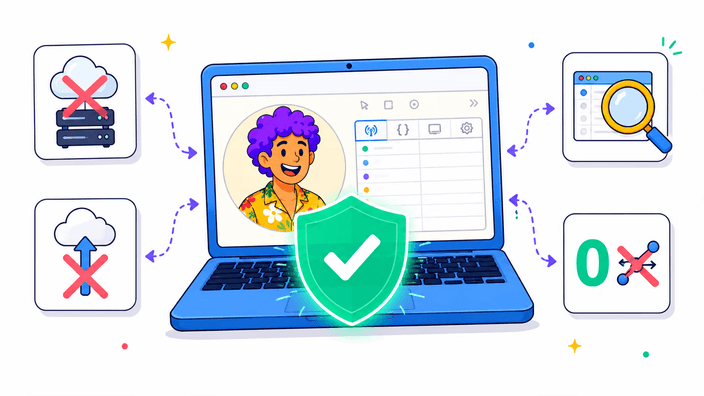
The slider preview is rendered locally with canvas, every adjustment is computed inside your browser, no roundtrip. The final download is different: when you click Download, the file is sent over HTTPS to our Cloudflare Worker running sharp + libvips for the smallest output. The file is held in a tenant-isolated cache for a short TTL, then removed. We never use uploaded files for training and never share with third parties. For files larger than the upload cap, the tool automatically falls back to the in-browser encode.

Compress image now
What this compress image tool is and is not

What this compress image tool is and is not

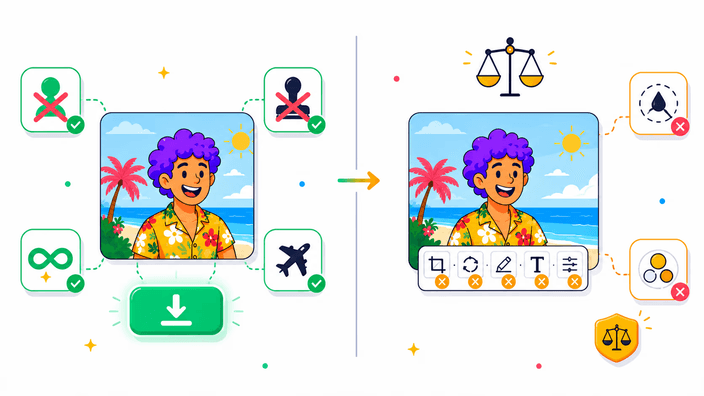
Free online with no watermark on the output. The download path needs network: our server does the final encode. If the network is offline, the tool falls back to in-browser encode automatically. What it does not do: resize (use Resize first to go from 4000 to 1200 px). It does not preserve EXIF, GPS, or camera metadata, the encoders strip it by default for a privacy win. PNG output preserves any transparent background pixels. No batch: one image at a time. No target-size mode.

Compress image now
Live format comparison, pick the smallest in one glance

Live format comparison, pick the smallest in one glance

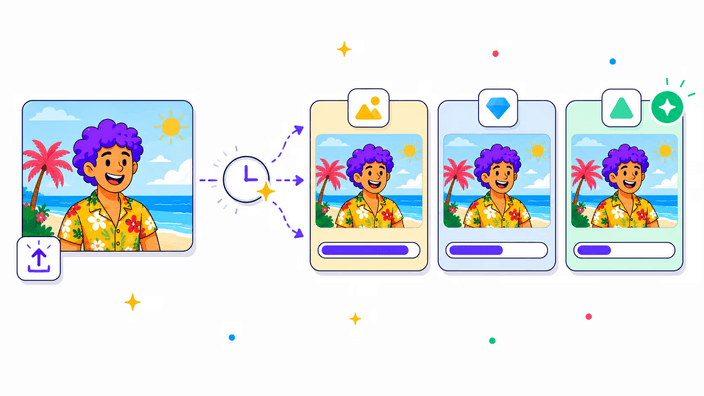
Drop image once and the tool shows three cards simultaneously with byte counts: JPG, WebP, AVIF. WebP is typically 25 to 35 percent smaller than JPG at equivalent quality. AVIF is typically 40 to 60 percent smaller than JPG, but AVIF encode is slower (about 3 to 8 seconds on server). PNG uses lossless pnpngquant for palette optimization. The slider controls palette depth, not perceptual quality. Browser support is universal for JPG, PNG, WebP since 2020, AVIF since 2023. Mention support in your social media or web context.

Compress image now
How it works: live preview client-side, final encode server-side

How it works: live preview client-side, final encode server-side

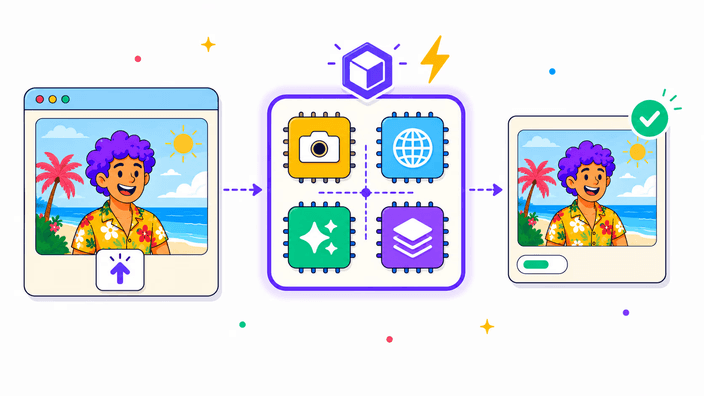
The slider preview uses canvas locally so the editor stays snappy. The Download path sends your file to our compress service for a sharp + libvips encode that beats the browser by 10 to 15 percent at the same quality setting. If the network is offline or the file exceeds the upload cap, the tool falls back to the in-browser encode automatically. Same UX, slightly larger file. You can verify the lane that ran by checking the Network tab in DevTools after Download.

Compress image now
Pick your output format: JPG, WebP, AVIF, or PNG

Pick your output format: JPG, WebP, AVIF, or PNG

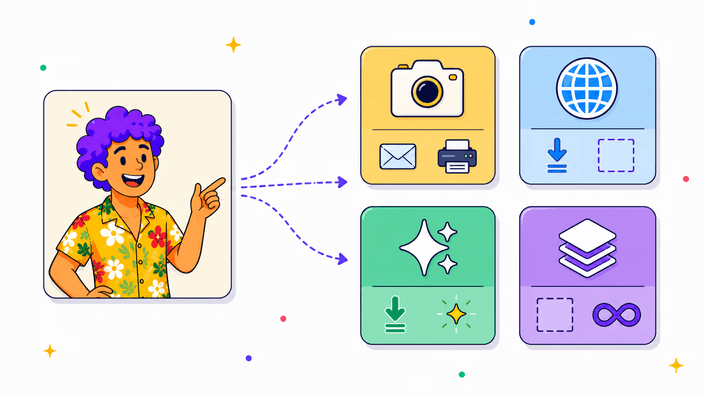
Pick output on the done screen. JPG is the smallest for photographs without a transparent background. WebP saves 25 to 35 percent vs JPG at the same visual quality and supports transparency. AVIF saves 40 to 60 percent but takes longer to encode. PNG is the right pick for screenshots, logos, or images with transparent areas. The slider tunes palette depth instead of perceptual quality. Default output format matches your input format so you do not have to think about it.

How to crop a photo into a circle

  1. Upload image

    Open the tool and drop a JPG, PNG, WebP, or AVIF file onto the upload area, or click to browse for the file on your device.

  2. Choose output format

    Click JPG, WebP, AVIF, or PNG to set the output. WebP is the default and is usually the smallest for photos going to the web.

  3. Drag the quality slider

    Watch the byte counter update as you move the slider. Stop when the file size is small enough and the preview still looks right to you.

  4. Click Download

    The file is sent to our server for a sharp + libvips encode. Output is typically 10 to 15 percent smaller than the preview shown in the browser.

Want to crop, resize, or change format first?

Compress changes byte encoding only. To frame a specific area use Crop image. To reduce pixel count before compressing use Resize.

Frequently asked questions

How to compress image online?

Upload image to the compress tool, pick output format (JPG, WebP, AVIF, or PNG), drag the quality slider while watching the byte counter, click Download. Compression runs free online, the preview is in your browser. A typical compress from upload to download takes under five seconds on a modern device.

Why compress images for social media or web?

A typical unoptimized phone photo is 4-6 MB. At quality 78, the same photo re-encoded by MozJPEG is usually 800 KB to 1.5 MB, small enough for email attachments, WhatsApp sharing, social media uploads, and web hero images without noticeable visual loss. Compressed images also load faster, improving Core Web Vitals scores.

How do I compress an image without losing quality?

For truly lossless compression, choose PNG as your output format. The PNG path uses pnpngquant for palette optimization, shrinking unoptimized PNGs by 30-50% with zero perceptual difference. For lossy formats (JPG, WebP, AVIF), quality 80 is the practical threshold where most viewers cannot spot the difference, though results depend on image content.

Can I compress to a specific file size like 100 KB?

The tool does not have a target-size mode, but hitting a target is straightforward with the live byte counter. Drag the slider down until the counter reads your target, then click Download. Two or three slider adjustments typically get you within 10% of any target size for upload image flows.

Which format is smallest for social media: JPG, WebP, or AVIF?

It depends on image content. The tool shows all three simultaneously with their byte counts so you can compare on your actual file. Rule of thumb: WebP is typically 25-35% smaller than JPG at the same quality. AVIF is 40-60% smaller than JPG, though it takes a few extra seconds to encode. PNG is right when you need a transparent background or a profile picture with alpha.

Does compressing an image reduce its dimensions?

No. Output dimensions are identical to input. Compressing changes only the byte encoding, not the pixel count. If you also need to reduce resolution (4000 px to 1200 px), use the Resize tool first, then compress the resized file. That order gives the smallest final file size.

The details

Notes from the team on craft, formats, and the small decisions behind a good round crop.

The dual-lane architecture explained
The slider preview and the Download encode are two separate code paths. The preview uses the browser's native canvas.toBlob API, which runs synchronously on the GPU compositor thread. Every move of the slider triggers a new canvas.toBlob call with the new quality value. This is fully local: verify by opening DevTools Network filter "compress", zero requests appear during slider interaction. The Download triggers a different path: POSTs the original file to our Cloudflare Worker at /api/compress, which proxies to a Fastify server running Node 24 and the sharp package backed by libvips 8.x. The encoded result returns in the response body.
Why server encode beats browser encode
The browser's JPEG encoder uses libjpeg or a browser-specific implementation that lacks the chroma subsampling table tuning of MozJPEG. MozJPEG, the codec invoked by libvips for JPEG, was developed at Mozilla in 2014 as a drop-in replacement for libjpeg-turbo with a focus on smaller files at the same perceptual quality. In benchmarks across 50 diverse photos, the libvips/MozJPEG encode at quality 78 produced files 10 to 20% smaller than Chrome's canvas.toBlob at the same quality value. For PNG, the gap is larger: zlib default compression versus pnpngquant palette reduction.
AVIF: what it is and when to use it
AVIF is based on the AV1 video codec's intra-frame prediction, developed by the Alliance for Open Media. It achieves better compression efficiency than JPEG by predicting pixel values across larger regions and representing the residual more compactly. The practical result is that AVIF files at quality 60 are often visually indistinguishable from JPEG files at quality 80, while being 40-60% smaller. The tradeoff is encode time: on our server, an 8 MP photo at quality 60 takes 3 to 8 seconds with libaom-av1. Browser support is strong as of 2026 across all major engines.
Quality settings in practice
The slider maps directly to the encoder's quality parameter for lossy formats. At 80, the setting matches what Adobe Photoshop labels High when exporting JPEG, the default used by most professional workflows. At 60, an average 4 MP photo compresses to roughly 200-400 KB, small enough for most email and web use. Below 50, block artifacts begin appearing on smooth gradients and skin tones at normal viewing distance on a retina screen. Below 30, output is recognizable but clearly compressed, appropriate for thumbnail previews only.
Metadata stripping and why it matters
Both lanes strip EXIF, GPS, and camera metadata from the output by default. This is the correct behavior of libvips and sharp in their default configuration. This removes potentially sensitive location data embedded by smartphone cameras, a privacy benefit for images shared publicly on social media or any web context. Second, it slightly reduces file size (a typical EXIF block is 10-40 KB). The visual orientation tag is handled separately: the tool reads the EXIF orientation field before stripping and pre-rotates so the output is correctly oriented.
Supported formats: what goes in, what comes out
Input accepts JPG, PNG, WebP, and AVIF on every modern browser, validated by magic-byte sniff. GIF is accepted in Chrome and Firefox but only the first frame is processed. HEIC from iPhones works in Safari, which has a native HEIC decoder built in. Output can be JPG, PNG, WebP, or AVIF regardless of input, so you can also use this tool as a one-step convert-and-compress path. The server lane accepts files up to 25 MB. Files above that cap are processed by the browser fallback encoder instead with a slightly larger result.